SuMoth Challenge 2027
The ninth edition returns to Fraglia Vela Malcesine on Lake Garda. Registration intentions are open now; the formal registration and full rulebook follow. This is a year-long campaign, from concept design to racing, and it starts the moment your team decides to commit.
From decision to race day.
A SuMoth campaign runs across the year in parallel stages. Here is the shape of it, from registration to the event on Lake Garda. Exact dates are confirmed closer to the edition.
- 7 Sep 2026 – 15 Oct 2026Registration intentionDoneChallengerRegistration
Teams present their project's foundation, objectives, and experience, ahead of being accepted into the formal Team Declaration phase.
- 14 Sep 2026 – 16 Oct 2026AGATE A screening periodDoneDeadlineCommitteeGates
Committee screening period. All Registration intentions that comply to the form will receive an answer.
- 21 Sep 2026 – 10 Nov 2026Team DeclarationNext upChallengerRegistration
The Team Captain submits the full Team Declaration on the SuMoth Team Space, with all four Team Leaders registered for it to count. The Committee scores every declaration and shortlists teams for the Screening Interview.
- 1 Oct 2026 – 24 Nov 2026BGATE B – Declaration evaluationDeadlineCommitteeGates
The committee reviews every Team Declaration submitted at Gate A and decides who moves forward to the screening interview.
- 30 Nov 2026 – 31 Dec 2026CGATE C – Screening InterviewDeadlineCommitteeGates
A 20-minute video call between the Committee and the team's leaders, checking commitment and capacity. The Team Manager and Team Captain must attend.
- 31 Mar 2027Stage S1 Report deadlineDeadlineChallengerDesign
Stage S1 Report deadline for all teams.
- 5 Apr 2027DGATE D – SuStruct Design evaluation (top 5)DeadlineCommitteeGates
Jury defines the top 5 SuStruct designs passing to the manufacturing phase for up to 100 points.
- 10 May 2027EGATE E – Proof of functionalityDeadlineChallengerGates
Teams demonstrate their boat actually works: on the water, structurally sound, before the final push to race week, ideally foiling.
- 16 Jun 2027 – 24 Jun 20272027 SuMoth Challenge EventChallenger + CommitteeEvent
On-Site event with up to 25 Challenger Teams
Rules & documents.
The Notice of Race, rulebook and official documents for the 2027 edition. Read these before submitting your registration.
Questions about the rules.
The most common questions about the 2027 rulebook and how the Challenge is scored. Still unsure? Get in touch.
Eligibility & registration
What kind of Team Structure can a team have?
Each participating team shall be constituted under one of the following two modalities:
- Independent University Team (IUT):
A team constituted as an independent legal entity recognized by its governing jurisdiction.
The Team Manager shall be a professor at the linked university.
The Team Leader may act as president of the association. - University Team (UT):
A team constituted pursuant to a research project under the responsibility of the Team Manager.
The Team Manager shall be a professor at the linked university.
How can a Team prove its Structure (IUT or UT)?
For all teams, legal status is declared through the completion of designated registration documentation (Team registration intention, Team declaration, etc.), specifically the Linked University Agreement.
IUT are additionally required to submit the association or entity’s statute and act of registration/constitution via the Repository.
Measurement & inspection
What is a Safety of Navigation Certification?
The Safety of Navigation Certification (SNC) is a mandatory document required from all Teams that guarantees, under the civil and criminal liability of both the signatory and the party holding criminal responsibility for the team (see UT vs. IUT distinctions), the safe operation of the SuMoth Concept.
The SNC must contain sufficient documentation attesting to the structural integrity and soundness of the prototype’s components.
While Mechanical Tests are intended to ensure the proper flow of the competition and verify that prototypes withstand the minimum expected loads for a foiling craft, the SNC is required to prevent injuries to the helmsman caused by the unexpected failure of a critical component. Given that prototypes possess unique features and specific construction characteristics, each team, under its own responsibility and together with its Team Manager, must evaluate the adequacy of the measures and tests performed, without prejudice to Rule 5.5.4 of the Rulebook.
Who can produce a Safety of Navigation Certification (SNC)?
The SNC shall be issued by the person legally and criminally liable for the Concept (as outlined in previous liability FAQ). If the liable party lacks sufficient technical qualification, they must obtain the certificate from a third-party certifier, such as a Notified Body operating under EU Directive 2013/53/EU and EU Regulation 765/2008.
Scoring & penalties
Can the 10,000 points be exceeded if enough bonus points are awarded?
Teams accumulating sufficient bonus points may surpass the 10,000-point threshold. This scoring structure is designed to incentivise teams to fulfill the criteria outlined in Section 2.2. of the Rulebook.
How does a team not lose 20% of the points when protesting?
A team can avoid or recover the 20% point deduction through three mechanisms:
- Resolve or withdraw prior to formal filing:
Reaching a settlement during Committee mediation at the skipper meeting, or withdrawing the claim before filing, incurs no point penalty. - High value deliverables or joint protests:
If the contested deliverable is worth more than 1,000 points or the protest is signed by more than one Team, the deduction is reduced to 10%. - Receive point reinstatement:
If the protest proves to be well-founded, or appears well-founded at the Committee’s, the deducted points are fully reinstated to the protesting Team.
How is the Performance Rating calculated
The Performance Rating of a boat is the sum of that of each component listed in SMC Rulebook Table 3. The Performance Rating of a single component is calculated by checking it against each condition in SMC Rulebook 11.1.3. If a component satisfies 3 conditions, it shall receive the sum of the points associated with those 3 conditions.
Example: a purchased used mast (pre-2017) satisfies conditions a), b), f), and g). It shall therefore receive a Performance rating of -40.
Equity Points (SMC Rulebook 11.2.) are applied as bonus points in the boat’s Performance rating.
Example: a boat has a nominal Performance Rating of 100 and is sailed by a female skipper, its Performance Rating shall be adjusted to 600.
What is the purpose of the protest point deduction?
The point deduction rule is designed to protect teams from unmeritorious protests and promote conciliation before formal filing. In most legitimate cases, the points are ultimately restored. A team should proceed with a protest when it has a valid claim, as all deducted points will be reinstated if the protest is proven correct or is shown to appear well-founded through supporting documentation or evidence.
Documents & submissions
What constitutes “Social Media Activity” and “Team Online Presence”?
“Social Media Activity” and “Team Online Presence” refer to any activity or media published on the social media accounts recognised by the competition, such as a team’s Instagram and LinkedIn accounts. This includes all posts, stories, temporary publications, and ephemeral content created or shared on behalf of the team.
What constitutes a “Public Activity” under Rule 3.2.1. of the Rulebook?
Under Rule 3.2.1., a “Public Activity” covers any in-person or real-time online event (such as virtual meetings or presentations) involving third parties outside the team and its sponsors. This rule allows the Committee to safeguard the reputation of the Competition and its sponsors against associations with entities that do not share their values.
The following events are always categorized as Public Activities:
- Conferences hosted by teams or attended as guest speakers;
- Exhibitions, trade shows, or public events where teams present their Team and/or SuMoth concept or craft;
- Seminars and workshops where the university officially uses the team name and cites the SuMoth Challenge or the Team.
Where can a team find all relevant dates and deadlines?
All dates and deadlines shall be published by the Committee in the Competition Timeline. However, the Competition Timeline does not cover the specific activities and detailed schedule of on-site SuMoth Events, except for their start and end dates. For the detailed event schedule, reference should be made to the Event Guidelines.
Who owns the right for the work produced in relation to the SuMoth Challenge?
Given that the SuMoth Challenge is dedicated to research purposes and SuMA+ operates as a non-profit entity, participation in the competition and execution of the requisite documentation constitutes agreement that all deliverables submitted for the event may be published and modified pursuant to a CC BY license, requiring attribution to the authoring teams.
Who can produce a Safety of Navigation Certification (SNC)?
The SNC shall be issued by the person legally and criminally liable for the Concept (as outlined in previous liability FAQ). If the liable party lacks sufficient technical qualification, they must obtain the certificate from a third-party certifier, such as a Notified Body operating under EU Directive 2013/53/EU and EU Regulation 765/2008.
S2 - Manufacturing
How is the Performance Rating calculated
The Performance Rating of a boat is the sum of that of each component listed in SMC Rulebook Table 3. The Performance Rating of a single component is calculated by checking it against each condition in SMC Rulebook 11.1.3. If a component satisfies 3 conditions, it shall receive the sum of the points associated with those 3 conditions.
Example: a purchased used mast (pre-2017) satisfies conditions a), b), f), and g). It shall therefore receive a Performance rating of -40.
Equity Points (SMC Rulebook 11.2.) are applied as bonus points in the boat’s Performance rating.
Example: a boat has a nominal Performance Rating of 100 and is sailed by a female skipper, its Performance Rating shall be adjusted to 600.
What are Mechanical Tests for?
Mechanical tests are not intended to prescribe average or maximum loads for concept designers. Rather, their purpose is to establish minimum structural benchmarks that must be satisfied to prevent common structural failures. Teams must account for all potential operational loads, and not limit their design considerations solely to those specified in the mechanical tests.
S3 - Racing
How is the Performance Rating calculated
The Performance Rating of a boat is the sum of that of each component listed in SMC Rulebook Table 3. The Performance Rating of a single component is calculated by checking it against each condition in SMC Rulebook 11.1.3. If a component satisfies 3 conditions, it shall receive the sum of the points associated with those 3 conditions.
Example: a purchased used mast (pre-2017) satisfies conditions a), b), f), and g). It shall therefore receive a Performance rating of -40.
Equity Points (SMC Rulebook 11.2.) are applied as bonus points in the boat’s Performance rating.
Example: a boat has a nominal Performance Rating of 100 and is sailed by a female skipper, its Performance Rating shall be adjusted to 600.
What insurance are teams required to have?
1. Personal Health Insurance
Teams must upload the following documentation for every member participating in the event:
- EU Teams: A valid European Health Insurance Card (EHIC).
- Non-EU Teams with an EU Healthcare Agreement: Proof of such agreement by citing the official legal source (including a link to the document issued by the relevant Ministry or national department) along with personal documentation guaranteeing medical coverage for the team member (e.g., the national health card of their country of origin).
- Non-EU Teams without an EU Healthcare Agreement: A personal health insurance policy providing a minimum coverage of €30,000, in accordance with Article 15 of Regulation (EC) No 810/2009 (EU Visa Code). For these teams, the skipper’s policy must explicitly include coverage for injuries/damages sustained during high-risk or hazardous sports activities.
2. Team Civil Liability Insurance
A third-party liability insurance policy with a minimum coverage limit of €1,500,000, incorporating the following specific requirements:
- Coverage for Non-Third Parties: Extension of coverage to individuals who might not strictly qualify as third parties (such as fellow competitors and event participants) during the course of the event;
- Coverage for Hazardous Activities: Explicit coverage for high-risk activities involving the use or operation of prototype vessels/craft.
Who is responsible if somebody gets hurt during sailing?
Liability for personal injury shall be determined on a case-by-case basis in accordance with the applicable legal framework and organizational structure.
For IUT, civil liability generally attaches to the association itself, whereas criminal liability typically rests with its president.
For UT, both civil and criminal liability reside with the university, falling upon senior academic officials such as the Rector and Head of Department under Italian law. Furthermore, individual liability for Team Leaders and Team Managers cannot be automatically excluded from the outset under either structure. Consequently, all teams are advised to consult their university’s legal department to confirm the precise allocation of liability under their governing jurisdiction.
S1 - Design
What is the SuStruct ?
Every team designs a SuStruct, a small-scale structure capped at 40 x 40 x 40cm, with the objective of being manufactured using the simplest techniques possible. It follows the same principles as the rest of S1, including a full LCA, but with a limited choice of materials, and is worth 100 points within Stage S1. The top 5 designs then get manufactured exactly as proposed, and tested to failure on a bench at the SuMoth Challenge 2027 event itself.
What qualifies as a Journal and what as a Conference for the assignment of points under Section 7.4.?
Under Section 7.4, a journal is any naval engineering publication recognised by the SuMoth Committee. Teams must request an evaluation for their chosen publication unless the article is submitted to the Journal of Sailing Technology edited by SNAME, which is automatically recognised and exempt from the evaluation request process.
Under Rule 7.4.2, a Conference refers to any third-party event where the team presents a scientific paper that has been submitted to an industry-specific journal. To earn points, the presentation must have undergone review and formal approval by a technical committee of field experts prior to acceptance.
Box rules
What standards must a Concept meet to qualify as a SuMoth and be eligible to compete?
To qualify for competition, a Concept must clear every gate established in the Rulebook and represented in the Flowchart. Key mandatory requirements that cannot be waived include the Proof of Functionality, the Mechanical Test Report, and the Safety of Navigation Certification.
Have a question first?
If your question matters to other teams too, it'll show up in the FAQ or as a Rulebook amendment.
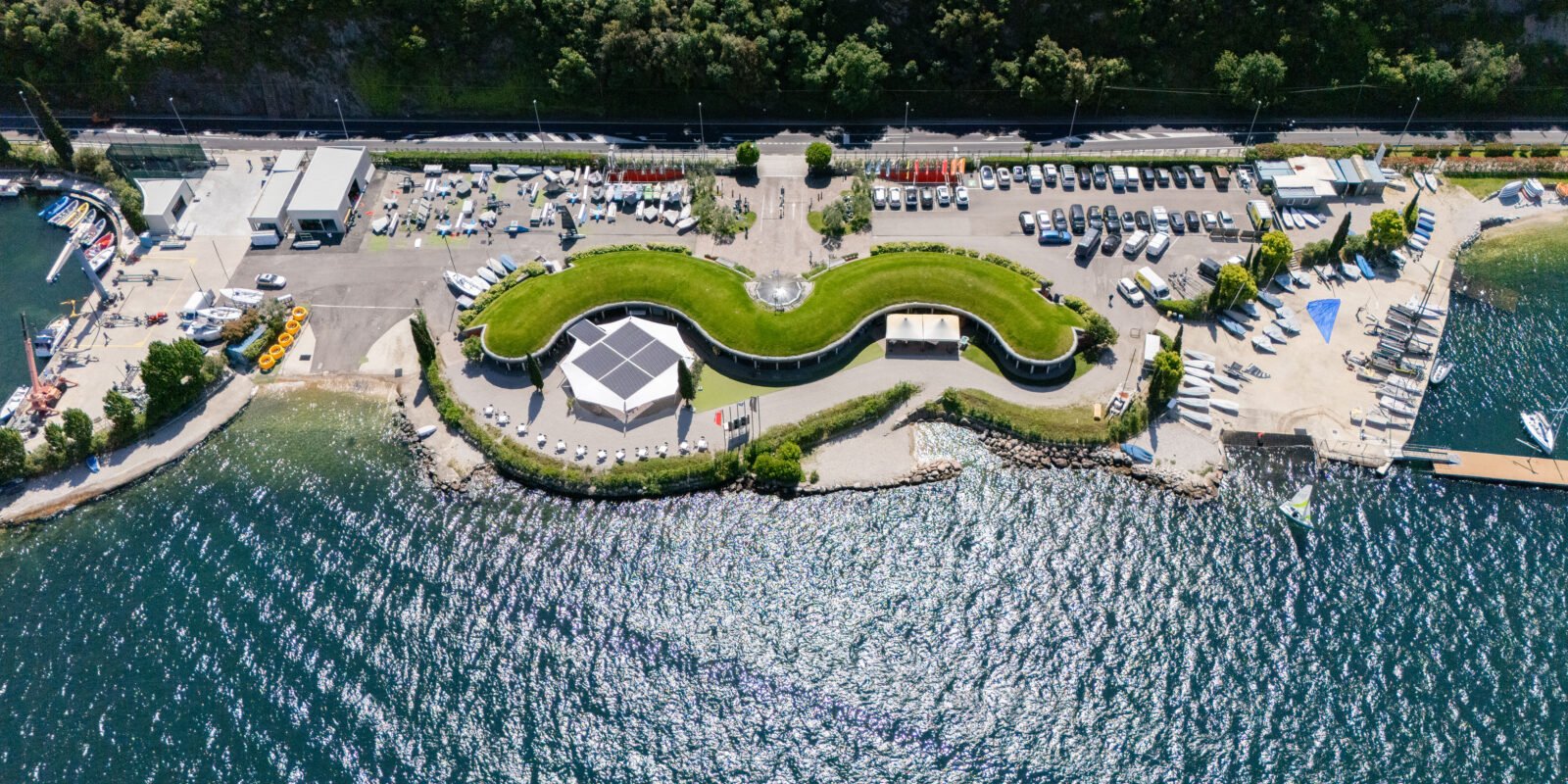
Home of the SuMoth Challenge on Lake Garda: a world-class foiling environment of lake, mountains and reliable wind, and a long-time supporter of the event, on and off the water.
Who backs the Challenge.

Committed to the health and resilience of ocean systems, supporting innovative, sustainable solutions through sport, storytelling and grant-making. Title sponsor since the beginning.



The team behind the event





Teams racing in 2027.
… teams confirmed so far. The map fills up as teams register their intention.
Loading teams…